
Why Do You Need a Ring Roller for Your Production?
Creating uniform bends and shapes can be one of the most challenging tasks of metal production. Manual operation or unprofessional equipment leads to inconsistencies, material waste, unsatisfactory bending, and increased labor time, all of these issues will ultimately affect the product you deliver to your customers.
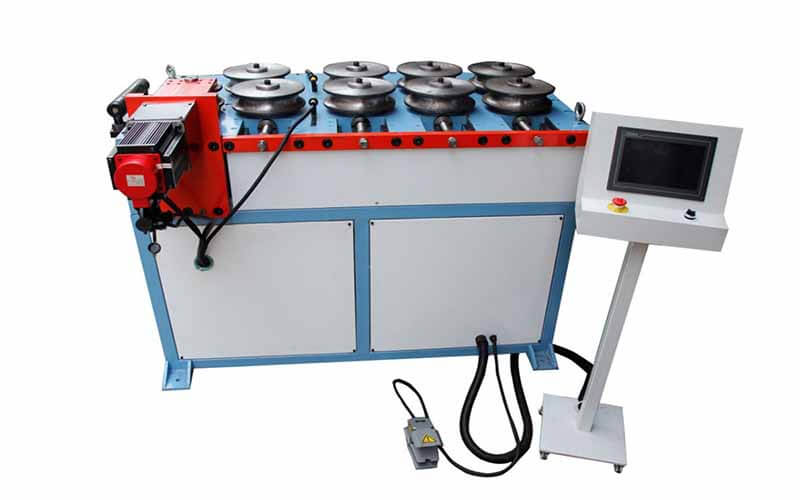
Today, we will introduce a powerful bending machine to you: the ring roller. As the name suggests, the ring roller bender can bend the tube and pipe like a ring (circle). You can use this machine in a wide range of applications, and you will never worry about bending accuracy and bending consistency.
What is a Ring Roller?
A ring roller is a specialized machine used for bending metal tubes, metal pipes, metal strips, and metal profiles into the desired shape. It operates by applying controlled pressure to the material between rollers, gradually forming it into a precise arc or ring shape. This industrialized production ensures bending precision, consistency, and efficiency.
Types of Ring Rollers
There are two common types of roll benders on the market: manual and hydraulic.
Manual Roll Bender
This roll bender is lightweight, small, suitable for light-duty applications, such as DIY projects, used in your home, or in the workshop that doesn’t need mass production. It is controlled and operated by hand, but you need to pay more attention, time, and effort.
Hydraulic Roll Bender
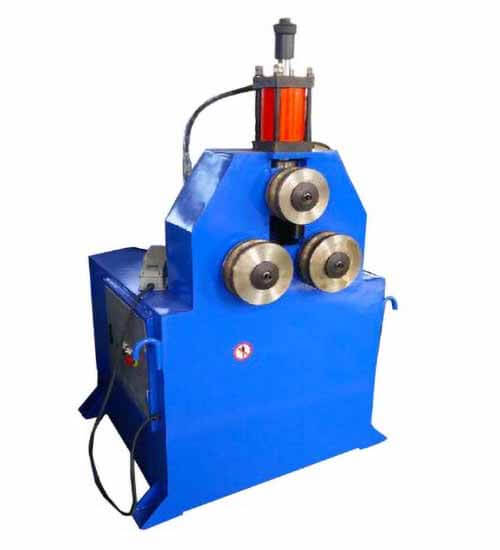
This roll bending machine is suitable for medium to heavy-duty applications. It uses the hydraulic system to generate the pressure that can bend the thicker material. Compared with manual type, this type can offer great consistency with higher volume production.
The Application of Bender Roller
As long as the application needs to bend ring shape or large curves, they will need the bender rollers to proceed with the manufacturing, including:
- Construction: The roller bender can be used to bend components for railings, fences, arches, etc.
- Agricultural: The ring roller bender can be used to bend grain bins, greenhouse arcs, silos, etc.
- Automotive: The metal ring rollers can be used to produce exhaust systems, chassis systems, air conditioning systems, etc.
- Manufacturing: The ring roller machine can be used in many industries, such as aerospace, medical, food processing, etc.
How does a Roll Bender Machine Work?
Due to the roll bender machine from different manufacturers being different, their setup and working process may vary, but the main process is as follows:
Setup
Put the material between two rollers at one end.
Start Rolling
Whether you choose what specific types of roll bender machine you choose, when you start rolling, your material will move in the set direction with the rotating roller, and the bending radius will also be based on the set value as the roller applies pressure to the material.
Adjustment
You can adjust the roller’s space to change the diameter of the ring you need to bend.
Finish
The bending process will finish when your desired bending size and shape are achieved.
See, the roller bender machine is very easy to use and requires less maintenance. Interested? Contact our engineer below to customize your metal roll bender!
Benefits of Using a Ring Roller in Production
Whether you are a DIY enthusiast or operate a metal fabrication business, the metal ring roller bender can offer many benefits, helping you bend perfect curves in your workshop.
Improve Working Efficiency
Especially since you are a metalworking factory, the roller bender machine is very useful for you. Unlike the manual roller bender, the hydraulic roll bender is more suitable for your production. This machine can provide high bending accuracy, high working efficiency, and high bending consistency. For any large curve-bending tasks, this is the first choice for large volume production.
High Consistency and Precision
Just as the working efficiency, consistency, and precision are also the roles the roll bender machine can provide for you. This machine will control the bending angles, radii, and curvature to ensure each piece of your product stay same, making your final product or projects stay in high-quality standards.
Versatility
The ring rollers are versatile for a wide range of applications, and they can process many materials, such as carbon steel, stainless steel, copper, brass, aluminum, etc in many shapes and forms, such as tubes, pipes, profiles, bars, strips, H shape, etc.
Save Cost
Bending with this machine, you will avoid the errors caused by human operation, which means you will reduce the material wastage and save on unnecessary waste.
Ring Roller vs. Other Bending Equipment
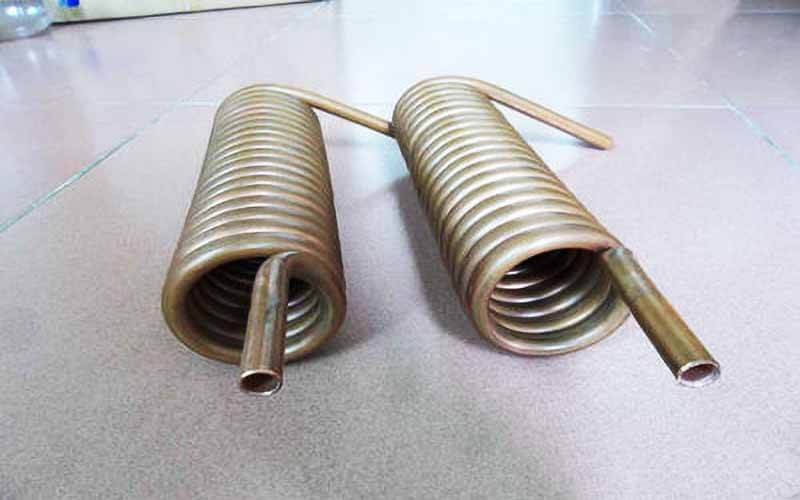
You may hear “ bending machines” so many times, but there are many types of metal bending machines in the market, please do not confuse them. Below we will have a comparison of the metal bending machines that are commonly seen/use for your better understanding.
Ring Roller vs. Plate Roller
- Capability: Both of them are used to shape materials. The ring roller is used to bend materials with multiple rollers. The plate roller is used to bend the flat metal sheet into large radius cylinders or cones.
- Materials: Both of them are used to bend metal materials. The ring roller bender is used to bend metal tubes&pipes and profiles, while the plate roller is used to bend metal sheets.
- Bending Shape: The metal ring rollers are used to bend consistent circular components, like rings, hoops, and frames, with precise, repeatable bends. The plate roller is used to bend large cylindrical forms or curved surfaces, such as tanks, pipes, and larger cylindrical components.
Ring Roller vs. Press Brake
- Bending Shape: Ring roller machine is used to bend continuous and circular shapes, but the press brake is used to bend the metal sheets with straight-line bends.
- Production Suitability: As we know, the metal ring roller is used to bend a circular shape in one step, but if you want to use the press brake to bend the circular shape, you will need multiple steps.
- Applications: The press brake is suitable to bend brackets, panels, or enclosures. The ring roll machine is suitable for bending large metal frames and metal supports.
Ring Roller vs. Tube Bender
- Bending Shape: Ring rollers are used to bend large circular sections with a large bending radius. But a tube bender is used to bend metal tubes with tight bending radius and more precise bends.
- Applications: Both of them are used to bend metal tubes, and they can work for many of the same industries. But the bends produced by the tube bender are required by a more precise application.
How to Choose a Ring Roller for Production?
For choosing a proper ring roller, you need to consider the following factors:
Material Thickness
The ring rollers have different types, from light duty to heavy duty. You need to check your bending material thickness first, then choose the right machine. The thicker the material, the more machine power is required.
Production Volume
If you only bend a little metal profile and you do not require high accuracy, a manual type is ok for you. But if you want to bend the metal tube in large volumes and require high accuracy, you will need the hydraulic roll bender to guarantee the bending quality.
Machine Size
Generally, the manual type is smaller than the hydraulic type. So, when you purchase the machine, you need to consider where to put it.
Budget
The manual ring roller is more affordable than the hydraulic ring roller.
TubeBenderN is the manufacturer of hydraulic ring roller in China. We provide various types of ring rollers to meet different requests. Contact our engineer to customize your ring roll machine today!
You may also be interested in:
Denis Lau
Denis Lau has 20 years of work experience in the metal processing industry. His major in university was mechanical engineering, and after graduation, he started from the bottom of the workshop, gaining extensive hands-on professional experience and the ability to tackle challenges from various industries.


