
A Complete Comparison of Mandrel Bending & Empty Bending
Tube bending is an important process whether you are producing automotive, HVAC, construction, or other manufacturing. It plays an important role in creating efficient piping systems, structural components, and other applications requiring precision and durability.
To achieve tube bending, there are two main methods: mandrel bending and empty bending. Each method has its own pros & cons, the method to use depends on the tube material, wall thickness, desired bending radius, and other specific bending requests.
This blog is a comprehensive comparison of mandrel bending and empty bending. We think it will be very helpful when you are choosing the most suitable technique for your specific tube bending needs.
What is Mandrel Bending?
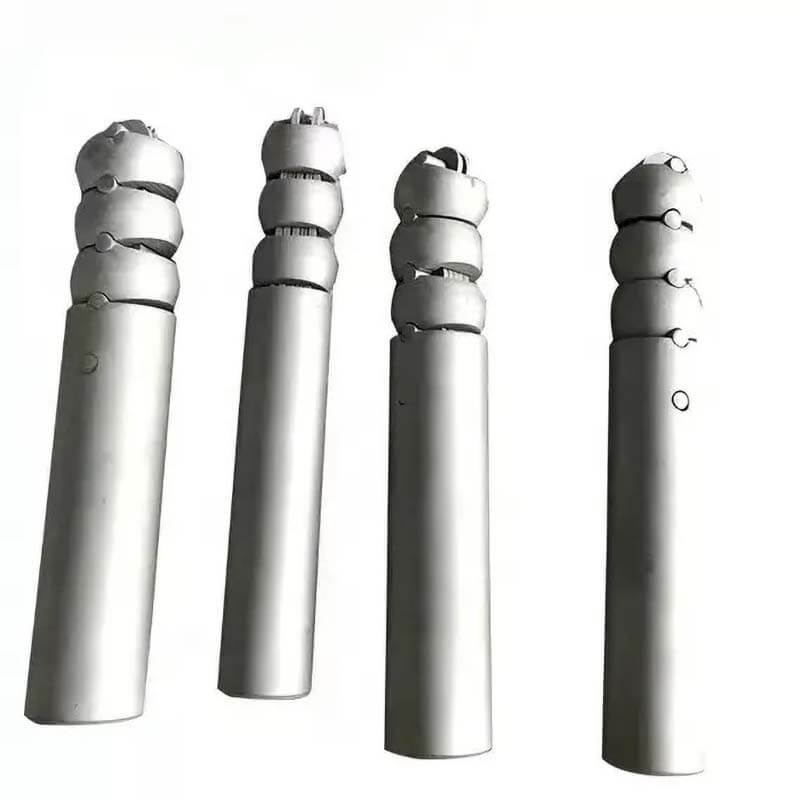
Mandrel bending is a tube bending technique that inserts a mandrel, which is a solid or flexible steel rod into the tube while bending. The role of the mandrel is like a support, it helps the tube maintain its shape and won’t get deformation during the bending process. The mandrel bending is particularly important when you want to create precise, tight radius bends without causing any wrinkling, flattening, or tube collapse.
How it Works:
- Insert the mandrel into the tube right place.
- The bending machine bends the tube around the bending die, and the mandrel inside the tube maintains the tube shape.
- The mandrel helps distribute the force evenly across the tube, ensures the tube’s roundness, even in tight bends.
Learn more about mandrel bending.
Advantages of Mandrel Bending
- Reduces Deformation: By supporting the inside of the tube, the mandrel can minimize the risks of tube wrinkling or collapsing, especially for the thin wall tube or tight bend radius.
- Maintains Ovality: Mandrel tube bending keeps the tube’s round cross-section, which is very important for applications that focus on flow and structural integrity.
- Ideal for Thin-Walled Tubing: No matter what material you are bending, as long as you are bending the thin wall tube, the mandrel bending performs very well in bending the thin wall tube without deformation.
Common Applications:
- Automotive Exhaust Systems: In the automotive exhaust system, thin wall tubes need to be bent to maintain the smooth airflow.
- Aerospace Components: The aerospace industry requires high-precision, deformation-free tubing to ensure structural safety and airflow efficiency.
- Heat Exchangers: Heat exchangers used in heating or cooling equipment often use thin-walled tubes, and the bending requires high precision.
What is Empty Bending?
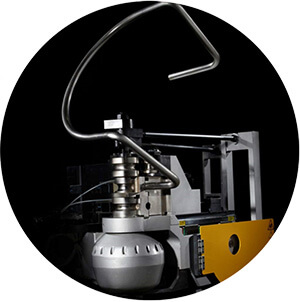
Empty bending is a technique that bends the tube without any internal support. In this method, the tube is simply bent around the bend tooling, relying solely on external forces to shape the tube. Since no internal tooling, this method is relatively simpler than the mandrel bending.
Advantages of Empty Bending:
- Simplicity: Due to you don’t have to set the mandrel inside the tube, the operation is easier, especially for less complex bending tasks.
- Lower Cost: Without the mandrel, you can reduce the tooling cost, making it a cost-effective option for many applications.
- Faster Setup: Since it requires fewer tools and adjustments, the setup time is shorter, making it suitable for quicker production cycles or one-off jobs.
Application of Empty Bending:
- Construction Handrails: On construction sites, empty bending is used to make handrails and balustrades. These parts often require a large bending radius, and the precision is not a critical factor.
- Irrigation Systems: In agricultural irrigation systems, empty bending is used to bend the pipes to meet the needs of large radius fluid pipes. These pipes are thicker and don’t require high bending accuracy.
- Greenhouse Frames: Empty bending is used to bend greenhouse frames because these structures use thick-walled tubes and have a large bending radius.
- Street Lighting Poles: Bending work on street light poles and outdoor structures, especially when a large bending radius is required, often uses empty bending. Since the poles are relatively thick, empty bending can meet their structural requirements.
- Basic Furniture Frames: For outdoor or simple metal furniture frames, empty bending can be used to make larger bends, such as the support structure of a chair or table.
Key Differences Between Mandrel Bending and Empty Bending
Mandrel pipe bending and empty bending are two bending techniques used for bending pipes and tubes, they look similar, but they are different. Let’s take a look at their key differences from 5 points.
Precision and Bend Quality
- Mandrel Bending: People who choose to use mandrel bending want to get precision and higher quality bends from this technique, especially for tight radius bending.
- Empty Bending: Tubes and pipes bent by empty bending do not have high precision. Also, due to the inside of the tube does not have internal support, the tube may experience some flattening or distortion, especially in tighter bends.
Tube Wall Thickness
- Mandrel Bending: This method is suitable for thin wall tube bending, since thin wall tube is easy to deform and with the support of the mandrel, the thin wall tube can maintain its shape throughout the process.
- Empty Bending: Empty bending works well for thick-walled tubing, which is more resistant to deformation. The method can easily handle larger-radius bends on thicker tubes without the need for internal support.
Complexity of Bends
- Mandrel Bending: Mandrel tube bending is a good choice to bend the complex and tight radius bends. With the support of mandrel inside, it can create intricate shapes without compromising the tube’s integrity, widely used in aerospace, automotive exhaust systems, and medical devices.
- Empty Bending: Empty bending is suitable for simpler, large-radius bends where structural precision isn’t critical.
Tooling and Setup Costs
- Mandrel Bending: Since the setting and coordination of the mandrel and other tools are required, the setting time and cost are relatively high.
- Empty Bending: This method requires less tooling and doesn’t need a mandrel, so the cost is lower and the setup is faster.
Production Speed
- Mandrel Bending: Mandrel bending generally has a slower production speed, since it needs more time to setup and the tooling is more complex, especially for high precision work.
- Empty Bending: For large-volume production with simpler bending requirements, empty bending is faster and more efficient.
When choosing the right tube bending machine, it’s important to assess your project’s specific needs. If you focus on quality, precision, and complex bends, mandrel bending is the best option. However, if cost, speed, and simple bends are your choice, then empty bending is your better choice.
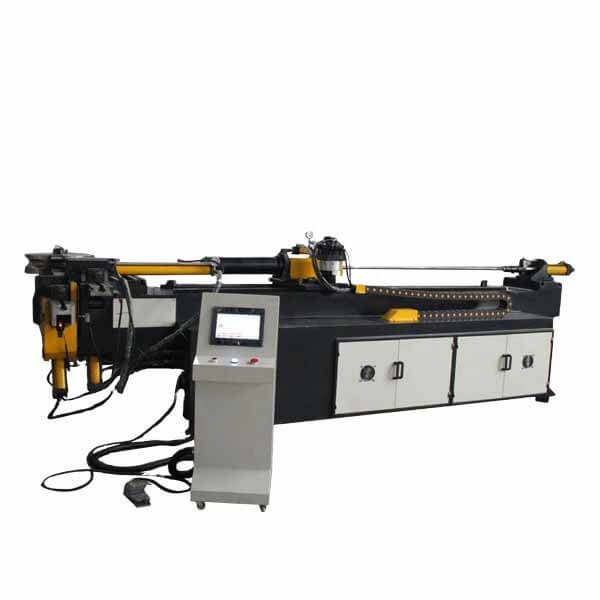
TubeBenderN is the manufacturer of mandrel tube bender in China. We can customize the machine according to your specific requirements. Contact our engineer with your detailed request below to get your best bending solution!
Denis Lau
Denis Lau has 20 years of work experience in the metal processing industry. His major in university was mechanical engineering, and after graduation, he started from the bottom of the workshop, gaining extensive hands-on professional experience and the ability to tackle challenges from various industries.


